The Afternoon Crash Your Barista Can't Fix: Circadian Science and the Case for the Midday Reset
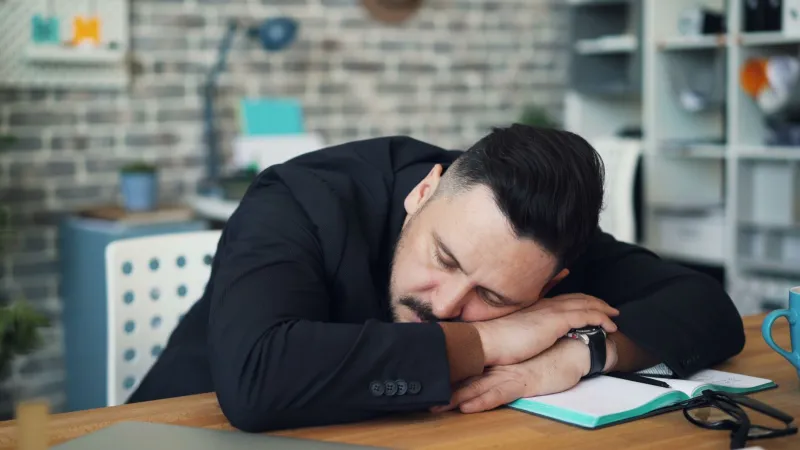
By mid-afternoon, the pattern is familiar to anyone who works in a downtown high-rise: focus frays, eyelids droop, and the siren call of the coffee shop downstairs grows impossible to resist. Most American professionals treat this daily decline as a problem to be solved with stimulants. The science suggests a different interpretation entirely.
The Dip Is a Feature, Not a Flaw
Human alertness doesn't run on a single twenty-four-hour clock. It oscillates in waves, and one of the most reliable troughs arrives roughly twelve hours after the midpoint of your night's sleep—a phenomenon researchers call the post-prandial dip, though it occurs even in people who skip lunch entirely. Core body temperature drifts downward, heart rate slows, and the brain's arousal systems ease off the accelerator.
For our ancestors, this was a natural window for rest. For the modern urban professional wedged between back-to-back meetings, it's an inconvenient biological inheritance. The slump isn't a malfunction. It's a signal.
Why the Fourth Espresso Backfires
Caffeine doesn't create energy; it masks the chemical adenosine that accumulates in the brain as a byproduct of wakefulness. Block the receptors long enough and the debt doesn't disappear—it compounds. Worse, afternoon caffeine lingers in the bloodstream for six hours or more, which means the 3 PM latte you reach for on Tuesday quietly sabotages your sleep on Tuesday night. And shallower sleep tonight guarantees a deeper slump tomorrow afternoon.
It's a loop many city dwellers run for years without recognizing it. The stimulant that rescues the afternoon is the same one that manufactures the next day's exhaustion.
What Actually Works in Twenty Minutes
The alternative is to work with the trough rather than against it. At our treatment rooms, we've watched clients transform their afternoons with brief, targeted interventions designed specifically for this window:
- Aromatherapy with stimulating botanicals. Citrus and rosemary essential oils, delivered through brief inhalation therapy, have been shown in clinical settings to heighten subjective alertness without touching the nervous system's chemistry the way caffeine does.
- Scalp and neck release. Fifteen minutes of focused work across the scalp, temples, and suboccipital muscles—the exact regions that tighten under screen strain—restores blood flow and interrupts the tension-feedback loop that makes fatigue feel heavier than it is.
- Brief heat exposure. A short session in a sauna or heated lounge elevates core temperature slightly; the subsequent cooldown mimics the natural temperature drop your body associates with restoration, leaving you refreshed rather than sedated.
A One-Week Experiment
You don't need to restructure your life to test this. For five consecutive workdays, replace your afternoon caffeine with a twenty-minute reset: book the express treatment, or if you can't leave the building, combine a brisk ten-minute walk with scalp self-massage and citrus aromatherapy at your desk. Track your energy hourly and your sleep quality nightly.
Most people who complete the week report the same discovery: the slump didn't need to be defeated. It needed to be honored. The body that crashes at four is the same body that will serve you for decades—and it responds remarkably well when you finally stop treating its signals as inconveniences.