When Quiet Becomes Unbearable: Retraining the Urban Mind to Rest Without Resistance
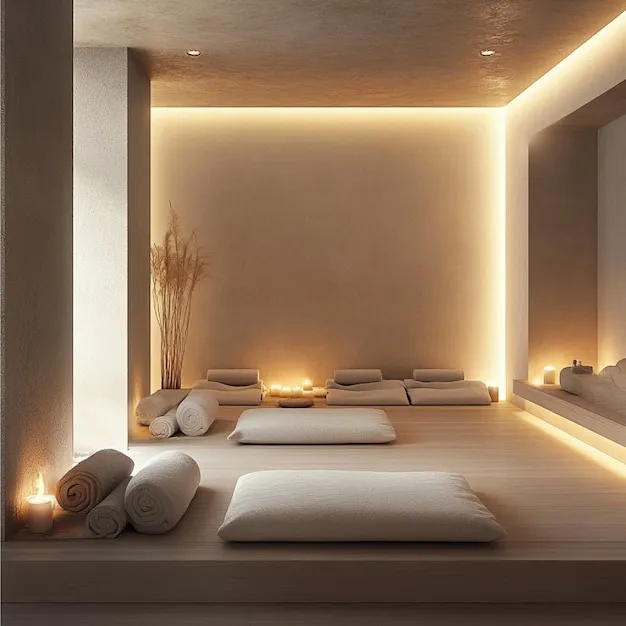
Photo: serene urban spa treatment room soft lighting quiet meditation, via img.freepik.com
There is a moment that many urban professionals recognize, even if they have never spoken it aloud. The treatment room goes dim. The ambient sound fades. The therapist steps out, and suddenly—unexpectedly—the silence feels less like a gift and more like a problem to be solved.
The impulse arrives almost immediately: to reach for a phone, to rehearse tomorrow's agenda, to inventory everything left undone. What was supposed to be an hour of restoration quietly becomes another arena for the restless mind.
This experience is not a personal failing. It is, in fact, a physiological consequence of modern urban life—one that has been studied, documented, and increasingly recognized as a barrier to the very wellness that city dwellers seek.
The Overstimulated Baseline
The human nervous system is remarkably adaptive. Expose it to sufficient stimulation over a long enough period, and it recalibrates its definition of "normal." For someone living and working in a major American city—navigating subway noise, open-plan offices, perpetual notification alerts, and the low-grade visual chaos of dense urban environments—that baseline shifts considerably higher than nature intended.
Neuroscientists refer to this phenomenon as sensory adaptation, and its implications extend well beyond mere distraction. When the brain is conditioned to process a continuous stream of external input, it begins to interpret the absence of that input as a signal of threat rather than safety. The amygdala, the brain's primary alarm system, registers silence not as calm but as an anomaly requiring vigilance.
In practical terms, this means that the very environment designed to help you decompress may initially trigger the stress response it was meant to dissolve.
Why Digital Connectivity Compounds the Problem
Beyond ambient urban noise, the smartphone has introduced a second layer of neurological conditioning that makes stillness increasingly difficult to tolerate. Research from the American Psychological Association has consistently found that the habit of checking devices—even in the absence of new notifications—activates the brain's dopaminergic reward pathways in ways that closely resemble other compulsive behaviors.
Over time, the brain comes to associate the act of reaching for a device with the possibility of reward. When that option is removed—as it should be during a proper spa treatment—the resulting discomfort is not imagined. It is a mild but genuine withdrawal from a pattern of stimulation the nervous system has come to depend upon.
The result is a troubling irony: the professionals who most need restorative quiet are often those least physiologically prepared to receive it.
The Therapeutic Value of What You Are Avoiding
Understanding why silence is difficult should not obscure why it remains essential. The parasympathetic nervous system—the branch responsible for genuine rest, cellular repair, and hormonal regulation—is activated most fully in conditions of low stimulation. This is the state that allows cortisol levels to fall, that permits the body to redirect energy toward immune function and tissue recovery, and that enables the kind of deep muscular release that distinguishes a truly restorative massage from a merely pleasant one.
When the mind remains in a state of low-grade agitation during a treatment, the parasympathetic response is blunted. The body receives a portion of the benefit it might otherwise claim. The silence, in other words, is not incidental to the healing—it is a significant part of the mechanism.
At Kara's Urban Day Spa, our treatment philosophy is built around this understanding. The quiet of our rooms is not decorative. It is clinical in purpose, even when it feels difficult to inhabit.
A Graduated Approach to Reclaiming Stillness
The encouraging reality is that the nervous system's adaptation to overstimulation is not permanent. The same plasticity that allowed it to recalibrate upward can be engaged to recalibrate downward—though the process requires patience and a degree of deliberate practice.
Begin before you arrive. In the thirty minutes preceding a spa visit, make a conscious effort to reduce stimulation progressively. Lower the volume of your commute playlist. Place your phone face-down rather than monitoring it at the reception desk. These small transitions signal to the nervous system that a shift in state is forthcoming, reducing the abruptness of the contrast between city noise and treatment-room quiet.
Name the discomfort without feeding it. When restlessness arises during a treatment—and initially, it will—the most effective response is simple acknowledgment rather than suppression or indulgence. Noting internally, "my mind is seeking stimulation," creates a brief observational distance from the impulse. This practice, drawn from established mindfulness-based stress reduction protocols, interrupts the automatic reach toward distraction without requiring years of meditation experience.
Use breath as an anchor, not a performance. Controlled breathing techniques are often presented as elaborate practices requiring precise counts and deliberate effort. For the purposes of acclimating to quiet, a simpler approach is more effective: breathe slightly more slowly than feels natural, and direct attention toward the physical sensation of the exhale. This occupies the mind with a neutral internal focus rather than an external one, easing the transition without demanding concentration.
Build the tolerance incrementally. If a sixty-minute treatment in complete silence feels genuinely destabilizing, begin with shorter services and work toward longer ones over successive visits. The nervous system responds to graduated exposure in the same way that physical fitness responds to progressive training. Attempting to force extended stillness before the system is prepared typically reinforces the association between quiet and discomfort rather than dissolving it.
Treat consistency as the variable that matters most. A single annual spa visit, however luxurious, cannot meaningfully retrain a nervous system that spends the remaining 364 days in a state of chronic stimulation. Regular, recurring appointments—even brief ones—create the repetition necessary for genuine neurological adaptation. The quiet that feels uncomfortable on the first visit of the year becomes incrementally more accessible on the fourth, the sixth, the tenth.
Silence as a Skill Worth Developing
American professional culture tends to treat the capacity for rest as a fixed personality trait—something one either possesses or lacks. The science suggests otherwise. Stillness, like strength or flexibility, is a capacity that responds to training. It diminishes with neglect and expands with practice.
The urban professionals who find the deepest benefit in spa treatments are rarely those who arrived already at ease with silence. They are, more often, those who encountered the discomfort honestly, understood its origins, and chose to return until the quiet began to feel less like an absence and more like a presence—something the body had been waiting, patiently, to receive.
That recalibration is available to anyone willing to pursue it. And there is no more appropriate setting in which to begin than a room designed, from floor to ceiling, to make it possible.