Your City Skin Has a Hidden Ecosystem—And Urban Spas Are Finally Treating It
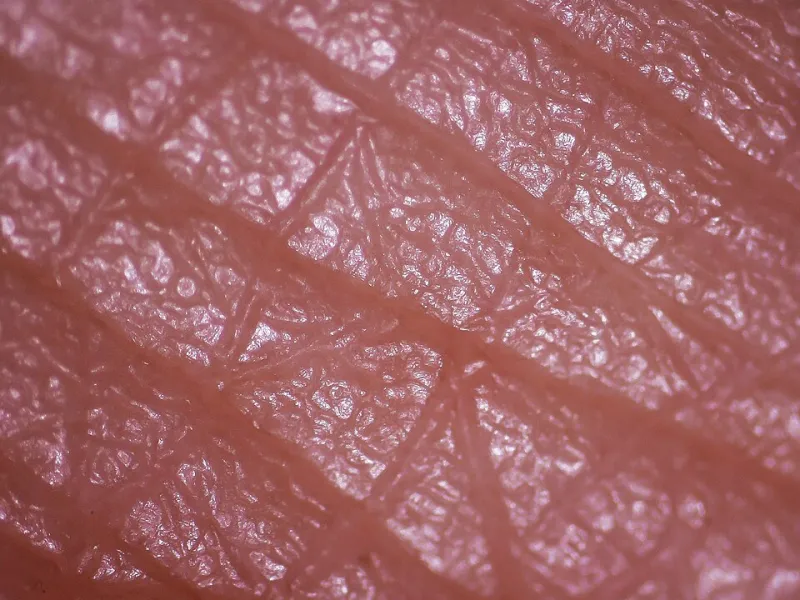
Photo: Dr. Polona Zalar - Department of Biology at Biotechnical Faculty of the University of Ljubljana, Kaja Kisilak, CC0, via Wikimedia Commons
For decades, the dominant philosophy of skincare—and by extension, of spa treatments—operated on a subtraction model. Remove oil. Eliminate bacteria. Strip impurities. The cleaner the slate, the healthier the skin. It was a compelling framework, and it produced an entire industry of products and services designed around aggressive purification.
The science of the skin microbiome has complicated that model considerably.
What researchers now understand is that human skin is not a surface to be sanitized. It is a living ecosystem—home to trillions of microorganisms, primarily bacteria, that perform functions essential to barrier integrity, immune regulation, and inflammatory response. Disrupting this ecosystem does not produce healthier skin. In many cases, it produces the precise conditions that drive the complaints most commonly heard in urban spa settings: sensitivity, persistent dryness, adult acne, and accelerated visible aging.
For city dwellers, the disruption is compounded by the specific conditions of urban life. And the spa industry is beginning to respond with treatments designed not merely to cleanse the skin, but to restore the microbial balance that city environments systematically undermine.
What Urban Environments Do to Microbial Balance
The skin microbiome is shaped by environment as much as by genetics. In cities, several overlapping factors conspire to alter its composition in ways that compromise skin health.
Pollution exposure is perhaps the most studied of these factors. Particulate matter—the fine particles generated by vehicle emissions, industrial activity, and construction—does not simply sit on the skin's surface. Research published in the Journal of Investigative Dermatology has demonstrated that urban pollutants penetrate the stratum corneum and generate oxidative stress that alters the pH environment of the skin. Because the skin microbiome is pH-sensitive, even modest shifts in acidity can favor pathogenic bacterial strains over protective ones, disrupting the competitive balance that keeps the ecosystem stable.
Municipal water systems present a separate challenge. Chlorine, added to public water supplies as a disinfectant, does not distinguish between harmful pathogens and the beneficial microorganisms on your skin. Regular washing with chlorinated water—particularly in cities with aggressive water treatment protocols—gradually depletes populations of protective bacteria, including Lactobacillus species that help maintain the skin's acid mantle.
Indoor air environments complete the picture. The average American office worker spends the majority of waking hours in climate-controlled spaces where air is filtered, humidity is reduced, and microbial diversity is dramatically lower than in natural environments. Emerging research in environmental microbiology suggests that sustained exposure to low-diversity indoor air may reduce the richness of the skin microbiome over time, leaving it less resilient to external stressors.
The Limitations of Conventional Spa Protocols
Traditional spa facials were not designed with the microbiome in mind. Many standard treatment sequences—particularly those involving enzymatic exfoliation, steam extraction, and high-pH cleansers—are effective at addressing surface-level concerns but indiscriminate in their effects on microbial populations. A thorough deep-cleansing facial may remove accumulated pollutants while simultaneously stripping the bacterial communities responsible for post-treatment recovery.
This is not an argument against cleansing. It is an argument for precision. The question the field is now grappling with is not whether to treat urban skin, but how to treat it in ways that support rather than suppress its biological infrastructure.
Emerging Therapies: Prebiotics, Probiotics, and Postbiotics in Practice
The most forward-thinking urban spas are incorporating microbiome science into their treatment protocols in several distinct ways.
Prebiotic facials introduce fermented botanical compounds and specific carbohydrate complexes that serve as food sources for beneficial bacterial strains. Rather than adding live organisms to the skin, prebiotics create conditions that favor the proliferation of the microorganisms already present. Ingredients such as inulin derived from chicory root, beta-glucan from oats, and lactulose have demonstrated efficacy in clinical settings at selectively supporting Staphylococcus epidermidis—a keystone species in healthy skin ecosystems.
Probiotic steam treatments represent a more direct intervention. Using nebulized formulations containing heat-stable bacterial lysates or live cultures of skin-compatible strains, these treatments introduce beneficial organisms to the skin during a period of elevated porosity and receptivity. The warmth of the steam simultaneously opens follicular channels and increases circulation, improving the conditions for microbial integration.
Postbiotic serums, applied as a final treatment step, deliver the metabolic byproducts of bacterial fermentation—short-chain fatty acids, bacteriocins, and enzymes—that communicate with the skin's immune receptors and reinforce barrier function without introducing living organisms that require specific storage conditions.
At Kara's Urban Day Spa, our approach to microbiome-conscious treatment begins with a skin assessment that considers not just visible conditions but the client's daily environment: commute exposure, office air quality, water source, and product history. This context shapes the treatment selection in ways that a surface-level consultation cannot.
Reading the Science Without Overstating It
It would be irresponsible to suggest that the skin microbiome is fully mapped territory. The field is young, and while the foundational science is robust, clinical validation of specific spa-delivered interventions is still accumulating. What the existing evidence does support, clearly and consistently, is the directional argument: that protecting and restoring microbial diversity is a legitimate and important dimension of skin health, and that treatments designed to strip or over-sanitize the skin work against this goal.
For urban professionals whose skin is navigating pollution, hard water, and recycled office air on a daily basis, this directional shift in spa philosophy is not a trend to observe from a distance. It is a clinical rationale for seeking out treatments built around restoration rather than reduction.
What to Ask Before Your Next Facial
As microbiome-conscious treatments become more prevalent, the ability to evaluate them critically becomes valuable. When consulting with a spa provider, consider asking whether their cleansing formulations are pH-balanced to the skin's natural acid mantle (approximately 4.5 to 5.5), whether their exfoliation protocols are calibrated to preserve rather than eliminate the stratum corneum's resident flora, and whether their treatment sequences include a restorative step following any active intervention.
The answers will tell you a great deal about whether a spa is working with your skin's biology or simply working on its surface.